Learn About Vacuum Circuit Breakers And How They Automatically Trip For Protection
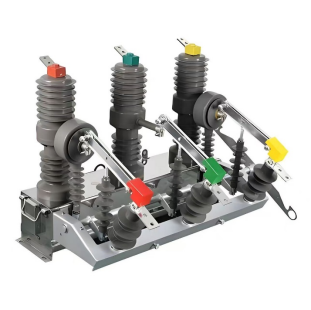
A 10kV manual outdoor high-voltage vacuum circuit breaker with isolation consists mainly of four parts:
Disconnector: It provides a clearly visible disconnection point on the line, facilitating maintenance work.
Current transformers: Typically two current transformers are used in manual isolated designs, which monitor whether the line current remains stable.
Vacuum interrupter chamber: The vacuum tube inside the chamber enables the opening and closing operations of the circuit breaker.
Mechanical box base: Contains an inrush current controller and operating mechanism, used to control the vacuum circuit breaker.
Principle of Automatic Protection Trip in Vacuum Circuit Breakers: In a 10 kV manual outdoor high-voltage vacuum circuit breaker with isolation, current flows sequentially through the incoming side, disconnect switch, current transformer, vacuum arc extinguishing chamber, and outgoing side. When a short circuit or overload occurs on the line, the current transformer detects these signals and transmits them to the surge controller inside the enclosure. The surge controller then activates the operating mechanism within the mechanism box, driving the vacuum tube in the vacuum arc extinguishing chamber to open. After tripping, no current flows through the outgoing side of the vacuum circuit breaker. In this case, maintenance personnel must manually open the disconnect switch for inspection.