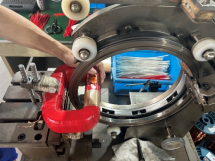
Daily Maintenance of Instrument Transformer Winding Machines
Instrument transformer coils demand high winding uniformity and stable tension. Daily maintenance directly affects coil inductance, winding quality, and reduces defects such as wire breakage, overlapping, and poor coil consistency.
1. Pre-Start Checks
Clean the machine exterior and workbench; check for loose screws or damaged cables.
Inspect wire storage discs, feed wheels, guide wheels, and wire passages for wear; ensure guide wheels rotate smoothly without jamming or excessive play.
Check tension mechanism: tension wheel, spring, brake pads; ensure adjustment is normal without sticking (unstable tension is the most common winding problem).
Run the machine at low speed for 1–2 minutes, listen for abnormal noise, vibration, or impact, and judge whether bearings, transmission, and gears are normal.
2. Cleaning During/After Shift (Key)
Winding generates copper powder, enamel wire debris, and lint, which can quickly wear guide wheels and scratch enamel insulation.
Use a soft brush and vacuum to clean copper debris and lint from wire storage discs, guide wheels, and winding mechanism.
Use low-pressure dry air to blow moving mechanisms. Never blow dust directly into servo motors, encoders, or electrical cabinets.
Wipe workbench, body, and control panel with a dry lint-free cloth. Do not spray cleaner directly onto electrical panels.
3. Lubrication Points
Apply specified grease/oil only to bearings, guide rails, and transmission gears according to the manual.
Apply a small amount; do not overfill. Oil dripping onto guide wheels or wire path causes slipping, tension loss, and enamel contamination.
Never apply oil to servo motors, encoders, or electrical components.
Perform daily lubrication checks only; quantitative oil addition should be done monthly.
4. Visual Inspection of Wearing Parts (Daily)
Guide wheels and wire pulleys: replace if grooved, stuck, or wobbling.
Tension components: brake pads and springs; replace if slipping or tension fluctuates, otherwise coil turns and winding consistency will fail.
Drive belts: check for cracks, aging, or abnormal tightness.
Sensors and counting heads: clean surfaces to prevent dust causing inaccurate counting or missed steps.
5. Shutdown and Protection
At the end of daily production, return the machine to origin, turn off power and air supply.
For long-term shutdown, clean thoroughly, apply rust protection to key rotating parts, and cover with a dust cover.
Maintenance and repair must be performed with power off and lockout/tagout. Never reach into rotating mechanisms while the machine is running.