


What Is a Circuit Breaker? Differences from Disconnector Switch
A circuit breaker (CB) is a critical electrical device in power systems that combines both control and protection functions. It is capable of closing, carrying, and interrupting currents under normal circuit conditions, and can also automatically interrupt abnormal currents—such as short‑circuit currents—within specified time parameters.
Primary functions of a circuit breaker: normal circuit making and breaking operations; automatic fault current interruption for circuit protection; remote control and automated operation; and fault isolation to facilitate maintenance and repairs.
Circuit Breaker vs. Disconnector Switch – Key Differences:
| Comparison Item | Circuit Breaker (CB) | Disconnector Switch (DS) |
|---|---|---|
| Primary Function | Close, carry, and interrupt normal and fault currents | Isolate power source; cannot interrupt load or short‑circuit currents |
| Current Interruption Capability | Yes (normal and fault currents) | No (only under no‑current or minimal‑current conditions) |
| Application | Circuit control and protection | Electrical isolation for maintenance safety |
| Operating Conditions | Can operate under energized / current‑carrying conditions | Must operate under no‑voltage, no‑current conditions |
| Structural Features | Equipped with arc‑quenching devices; complex structure | No arc‑quenching devices; simple structure |
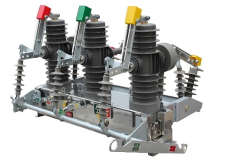
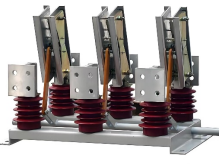
In simple terms: the circuit breaker is responsible for "protection and switching," while the disconnector is responsible for "isolation and maintenance safety" – they are complementary and indispensable in any power system.
CNYIHU offers a complete range of vacuum circuit breakers, including the ZW3VS1‑24(15) Indoor High‑Voltage Vacuum Circuit Breaker, designed for reliable performance in demanding distribution applications. All our circuit breaker products undergo rigorous Power Frequency Withstand Test, Lightning Impulse Test, and Partial Discharge Test to ensure uncompromised quality and safety.

